


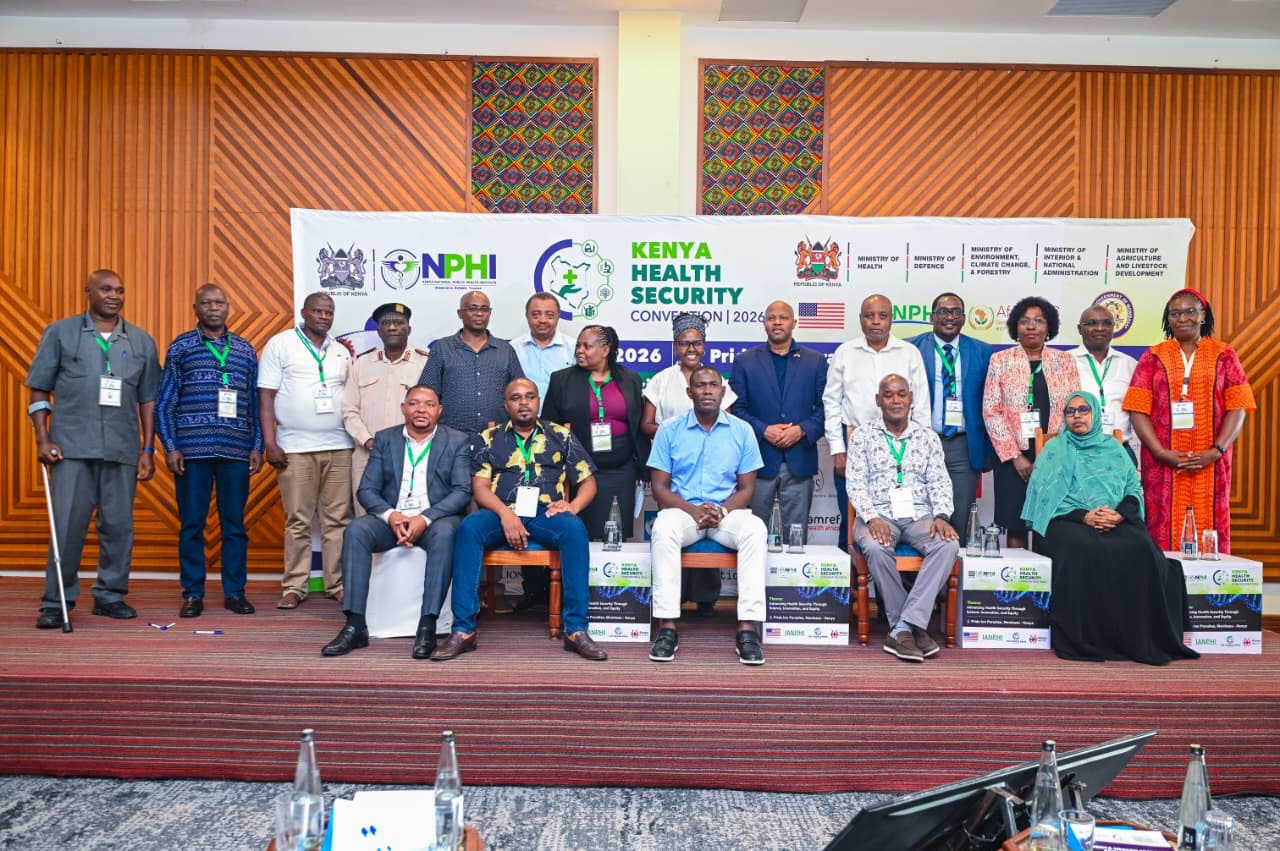


𝐊𝐞𝐧𝐲𝐚 𝐀𝐝𝐯𝐚𝐧𝐜𝐞𝐬 𝐇𝐞𝐚𝐥𝐭𝐡 𝐒𝐞𝐜𝐮𝐫𝐢𝐭𝐲 𝐀𝐠𝐞𝐧𝐝𝐚 𝐚𝐭 𝐍𝐚𝐭𝐢𝐨𝐧𝐚𝐥 𝐂𝐨𝐧𝐯𝐞𝐧𝐭𝐢𝐨𝐧
Mombasa, Kenya - 5 April 2026 - Kenya has stepped up efforts to strengthen preparedness and response to public health threats at the ongoing Kenya Health Security Convention in Mombasa, bringing together policymakers, researchers, frontline responders, and development partners.
The forum, organised by the Kenya National Public Health Institute (KNPHI), is focused on translating science, innovation, and policy into practical actions to enhance national and regional health security.
Speaking during the official opening of the Convention, the Principal Secretary for Medical Services, Dr. Ouma Oluga, representing the Cabinet Secretary for Health, Hon Aden Duale, emphasised that recent disease outbreaks and pandemics have reinforced the need for continuous and deliberate preparedness.
He noted that Kenya is prioritising critical building blocks of health security, including disease surveillance, laboratory networks, emergency operations, and stronger coordination between national and county governments to ensure timely detection and response to emerging threats.
“Preparedness must be embedded in our systems, not activated only during crises,” the Principal Secretary said, underscoring the need for sustained investment in resilient health systems.
The Convention is also reinforcing a multisectoral approach to health security, recognising the interdependence between human, animal, and environmental health. Participants highlighted the importance of aligning efforts across sectors such as agriculture, water, environment, and infrastructure to strengthen overall preparedness.
The role of KNPHI as Kenya’s scientific and technical anchor was highlighted, particularly in advancing surveillance, laboratory coordination, and evidence-based decision-making to guide response efforts.
Parliamentary leadership reaffirmed support for the Institute through strengthened legal frameworks, financing, and intergovernmental coordination, while development partners emphasised the importance of sustained collaboration to reinforce national systems.
The Convention is expected to deliver actionable outcomes aimed at strengthening preparedness, improving coordination, and enhancing Kenya’s capacity to prevent, detect, and respond to public health threats.
Others present included the Chargé d’Affaires of the United States Embassy in Nairobi, Susan M. Burns; Acting World Health Organization Representative to Kenya, Dr. Neema Kimambo; Chairperson of the Kenya Vision 2030 Delivery Board, Dr. Emmanuel Nzai; KNPHI Board Chairperson, Paul Kariuki; and Acting Director-General, Kamene Kimenye.